Global Semiconductor Sales Surge in Q1 2026: Is the Industry Heading Toward a $1 Trillion Era?
The semiconductor industry continues demonstrating extraordinary momentum as worldwide demand for advanced electronics, artificial intelligence infrastructure, automotive systems, industrial automation, and next-generation connectivity technologies accelerates at unprecedented speed.
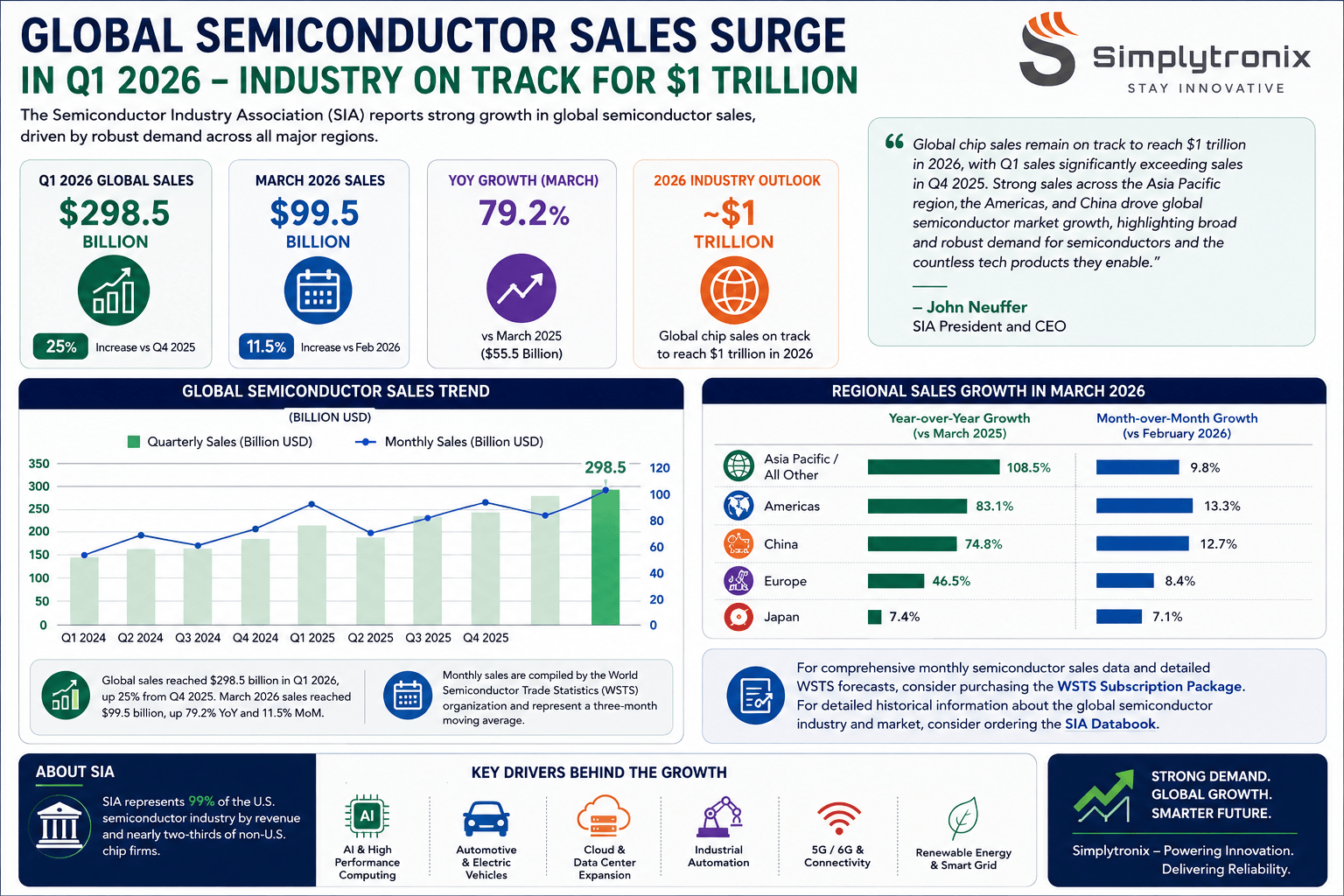
According to recently released market data from the Semiconductor Industry Association (SIA), global semiconductor sales reached $298.5 billion during the first quarter of 2026, representing a remarkable 25% increase compared to Q4 2025. Monthly sales during March 2026 reached $99.5 billion, increasing by 79.2% compared to March 2025 and 11.5% compared to February 2026. These figures are compiled by World Semiconductor Trade Statistics (WSTS) using a three-month moving average methodology. :contentReference[oaicite:0]{index=0}
At Simplytronix, we closely monitor semiconductor market trends because changes in the global semiconductor ecosystem directly influence supply chain stability, component availability, pricing behavior, sourcing strategies, and long-term technology planning.
Q1 2026 Semiconductor Market Performance at a Glance
| Metric | Value |
|---|---|
| Q1 2026 Global Sales | $298.5 Billion |
| Growth vs Q4 2025 | 25% |
| March 2026 Sales | $99.5 Billion |
| Year-over-Year Growth (March) | 79.2% |
| Month-over-Month Growth (March) | 11.5% |
| 2026 Industry Projection | Approximately $1 Trillion |
These numbers indicate that the semiconductor industry is no longer experiencing isolated growth in specific sectors. Instead, expansion is occurring across multiple markets and applications simultaneously, reflecting a broader transformation in global technology demand. :contentReference[oaicite:1]{index=1}
What Is Driving the Massive Growth?
Several technological and market factors are contributing to the current semiconductor expansion cycle.
Artificial intelligence remains one of the most powerful growth engines in the semiconductor market. Large-scale AI infrastructure requires enormous computational capability, driving demand for GPUs, AI accelerators, memory systems, networking chips, and high-performance processors.
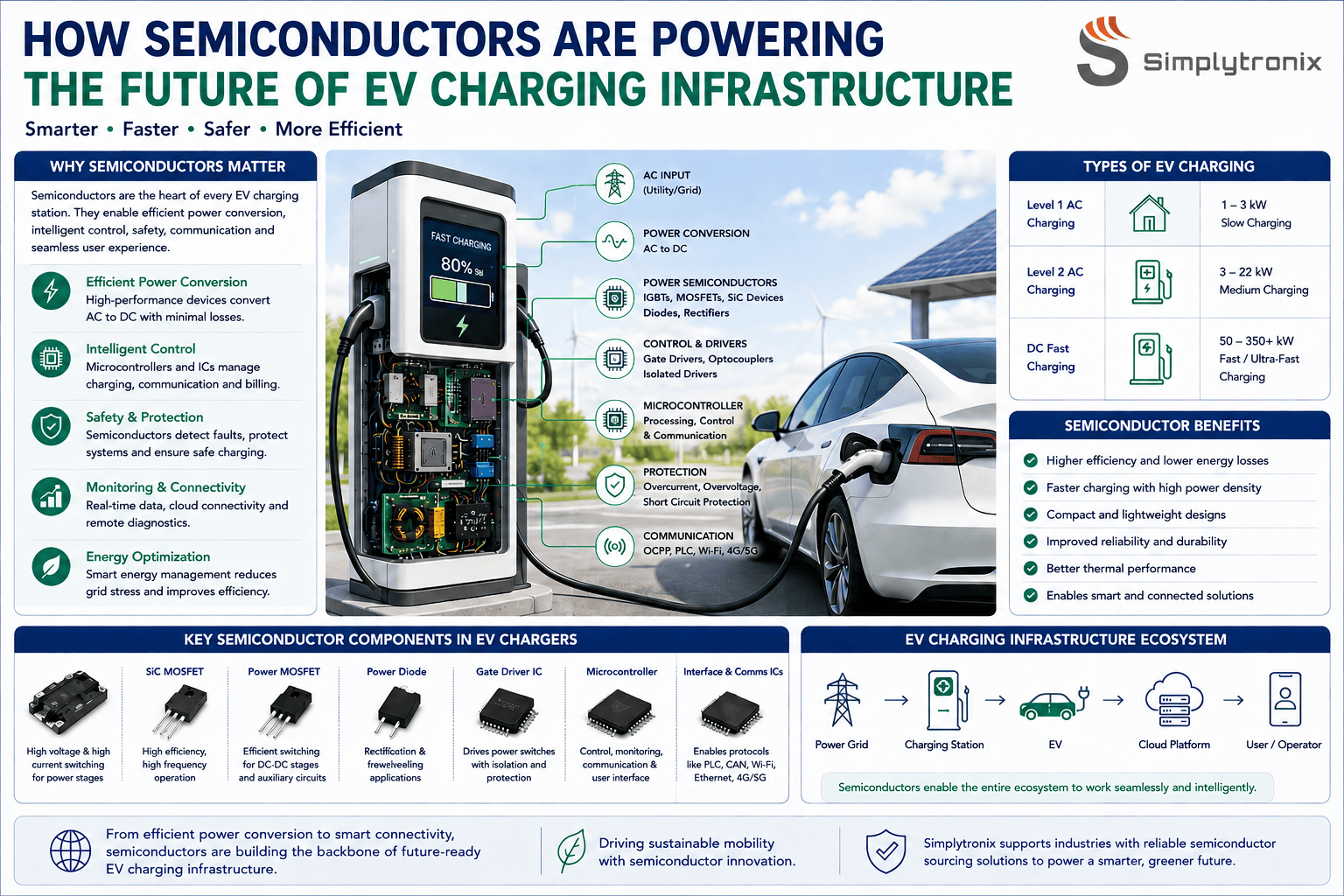
At the same time, semiconductor demand continues growing across electric vehicles, industrial automation systems, cloud computing, edge computing, consumer electronics, telecommunications infrastructure, renewable energy systems, and smart manufacturing environments.
| Growth Driver | Impact on Semiconductor Demand |
|---|---|
| Artificial Intelligence | High demand for accelerators and memory |
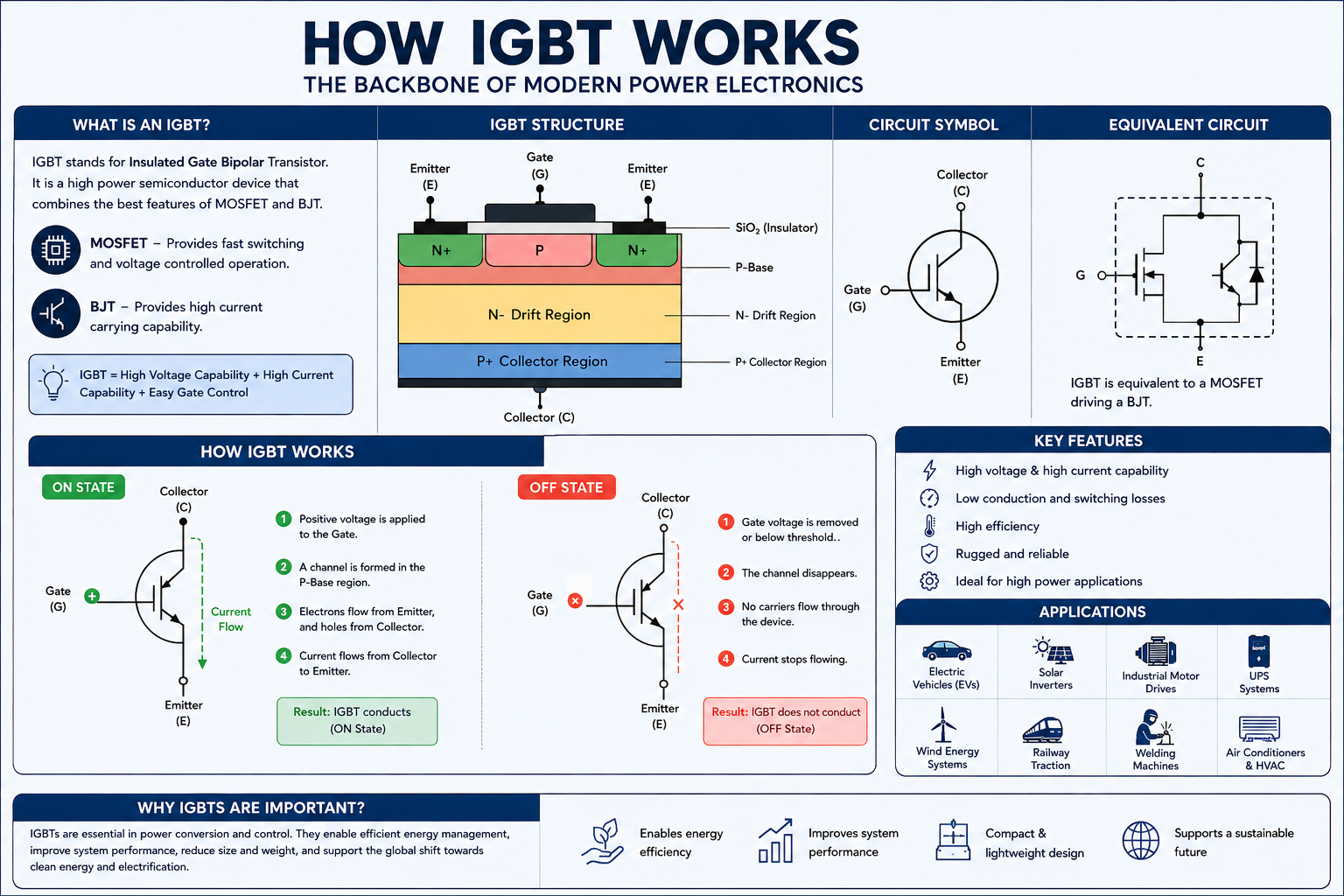
| Electric Vehicles | Power semiconductor expansion |
| Data Centers | Increased processing requirements |
| Industrial Automation | Sensors, controllers, and processors |
| Renewable Energy | Power management devices |
| IoT Growth | Connected device deployment |
Regional Performance Highlights
One of the most interesting aspects of the recent report is the broad geographic distribution of growth. Rather than being concentrated within a single market, semiconductor demand is expanding globally.
| Region | Year-over-Year Growth | Month-over-Month Growth |
|---|---|---|
| Asia Pacific / Other Regions | 108.5% | 9.8% |
| Americas | 83.1% | 13.3% |
| China | 74.8% | 12.7% |
| Europe | 46.5% | 8.4% |
| Japan | 7.4% | 7.1% |
The Asia Pacific region experienced the strongest annual growth, exceeding 100%. Growth in this region is largely influenced by semiconductor manufacturing ecosystems, AI supply chains, advanced packaging capabilities, and increasing domestic technology investments. Meanwhile, the Americas and China also showed extremely strong performance, indicating continued investment in both production capacity and end-user demand. :contentReference[oaicite:2]{index=2}
The Road Toward a $1 Trillion Semiconductor Industry
Industry projections increasingly suggest that the semiconductor market could approach or exceed $1 trillion in annual revenue during 2026. If achieved, this milestone would represent one of the largest growth periods in semiconductor history.
Only a few years ago, industry sales were considerably lower. Reaching the trillion-dollar threshold demonstrates how semiconductors have evolved from supporting technologies into essential infrastructure for the digital economy.
Today, semiconductor devices are found in nearly every technological system:
- Artificial intelligence platforms
- Electric vehicles
- Industrial robots
- Cloud computing systems
- Medical equipment
- Telecommunication networks
- Smart cities
- Consumer electronics
- Defense systems
- Renewable energy technologies
Supply Chain Implications
Rapid market expansion creates opportunities but also introduces significant challenges for supply chains.
During previous semiconductor cycles, unexpected demand spikes led to shortages, increased lead times, and pricing volatility. Organizations increasingly recognize the importance of proactive sourcing strategies and supply chain diversification.
| Supply Chain Challenge | Potential Impact |
|---|---|
| Long lead times | Production delays |
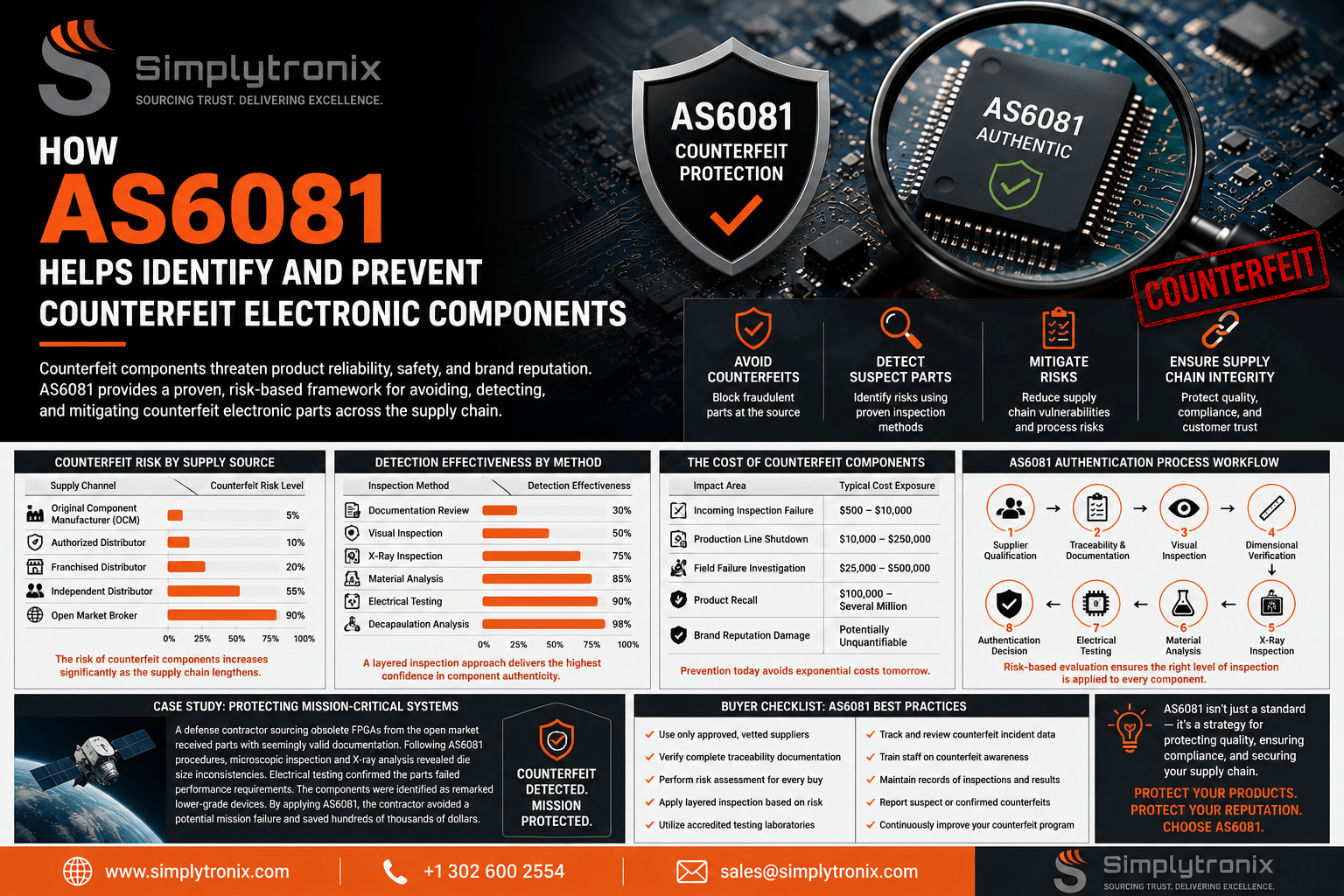
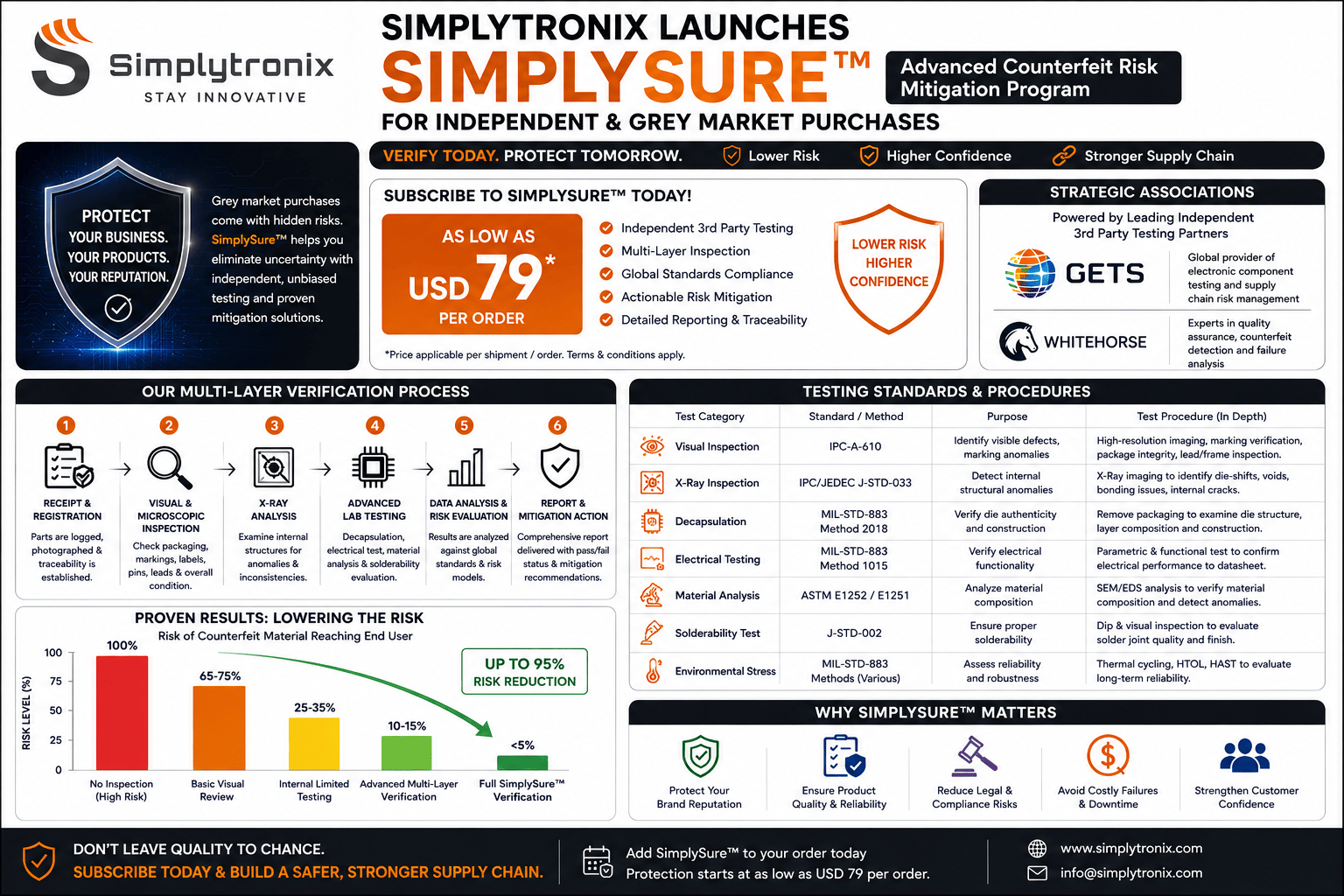
| Counterfeit risks | Quality concerns |
| Regional concentration | Supply vulnerability |
| Demand volatility | Inventory challenges |
| Pricing fluctuations | Budget uncertainty |
At Simplytronix, we continue helping customers navigate evolving semiconductor market conditions through AI-enabled sourcing methods, supplier validation, traceability initiatives, and procurement strategies designed to improve supply chain resilience.
Conclusion
The latest SIA figures demonstrate that the semiconductor industry continues entering a new era of accelerated growth. Global sales reaching nearly $300 billion in Q1 alone highlights strong demand across regions and technology sectors.
With AI, electric mobility, smart infrastructure, and digital transformation driving sustained semiconductor demand, the path toward a trillion-dollar semiconductor industry appears increasingly realistic.
As the market evolves, companies that establish strong sourcing networks and resilient supply chains will be better positioned to capitalize on future opportunities.